
TL;DR
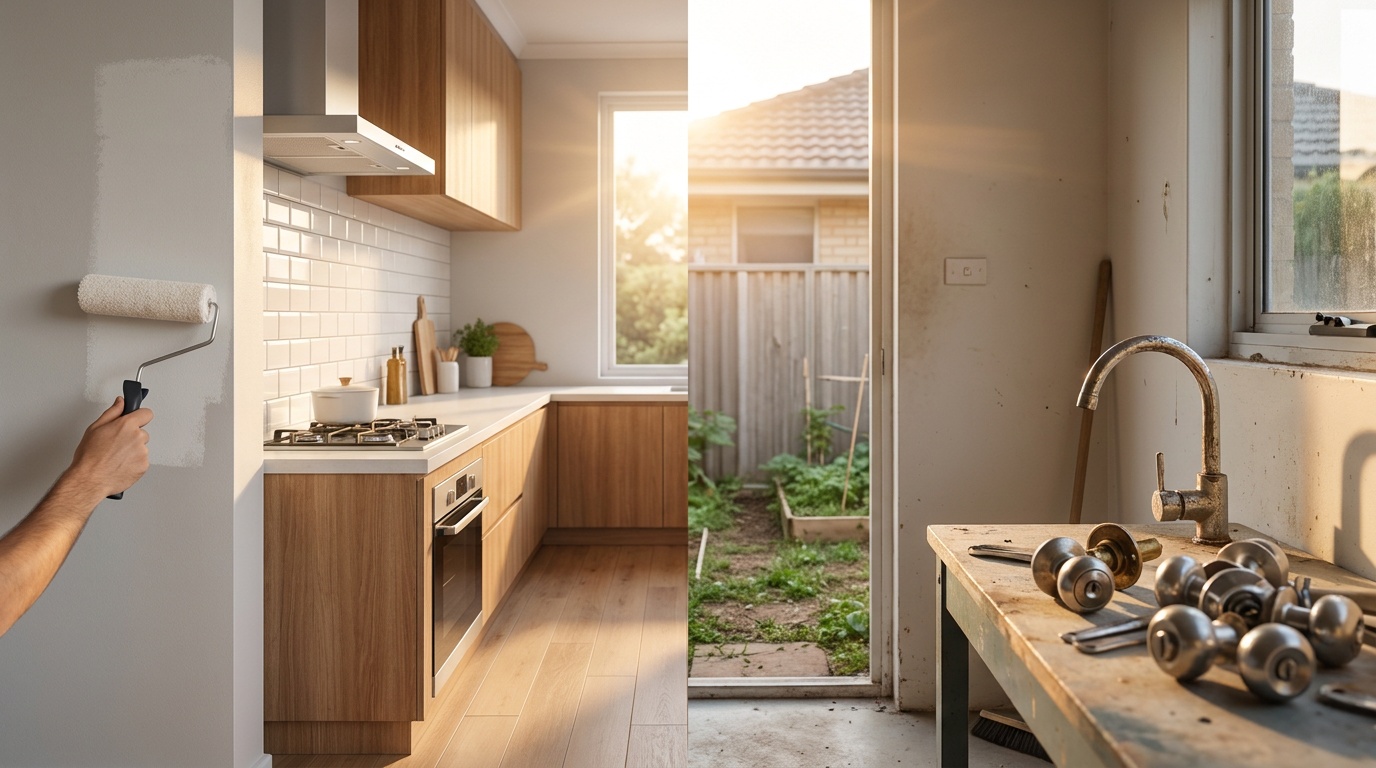
- Minor repairs, neutral paint, curb appeal, deep cleaning, and decluttering deliver the strongest return before you list.
- Full kitchen remodels, high-end finish upgrades, and landscaping overhauls rarely pay you back dollar for dollar.
- What's worth fixing shifts by price point. A $150K starter home and a $1.5M estate need different playbooks.
- Staged, decluttered homes sell faster and for more, according to NAR's staging research.
- A pre-listing walkthrough with a listing coordinator settles the "fix or skip" question before you spend a dime.
The Overwhelm Is Real, and It's Costing You Time
You searched "what to fix before selling your house" and got twenty lists, each pushing a different must-do: repaint everything, gut the kitchen, redo the landscaping before a single showing happens. None of these lists knows your home, your neighborhood, or your price point, and generic advice treats a $140K Cleveland Heights colonial the same as a $2M Bratenahl lakefront.
Some fixes change how buyers perceive value the moment they walk in. Others change nothing except your bank balance. Below is the breakdown, backed by industry data, not guesswork.
5 Things Worth Fixing Before You List
1. Minor Repairs (Leaky Faucets, Cracked Caulk, Loose Handles)
Small, visible flaws make buyers wonder what else is wrong that they can't see. A dripping faucet or a wobbly cabinet handle costs little, mostly parts and an hour of your time, but can plant doubt during an inspection or a walkthrough. Fix these first. They're cheap, fast, and remove friction before it starts.
2. Fresh Paint in Neutral Tones
A coat of paint is one of the lowest-cost, highest-impact projects available to a seller. Repainting two or three accent walls in a warm, neutral tone is a modest investment compared to any remodel, and it pays off in buyer perception. Bold accent walls or dated color choices can distract buyers from the bones of the house, while neutral tones let buyers picture their own furniture in the space, which matters more than most sellers expect.
3. Curb Appeal Basics
First impressions start at the curb, not the front door. According to NAR's remodeling impact research on outdoor features, 92% of REALTORS\u00ae recommend that sellers improve curb appeal before listing, with landscape maintenance (74%), standard lawn care service (53%), and tree care (44%) topping the list of specific projects agents suggest, according to NAR's 2023 coverage of the report. This doesn't mean a full landscaping overhaul (more on that below). It means mowed grass, trimmed hedges, and a porch that looks cared for, achievable with a modest budget for mulch, a cleaned-up walkway, a fresh doormat, and a potted plant at the entry.
4. Deep Cleaning
This is the most underrated item on any pre-listing list. NAR's staging report found that staged and cleaned homes sell faster and for higher prices than homes that aren't. Hiring a cleaning crew costs far less than any remodel, and it directly affects how buyers perceive the home's condition, whether or not that perception is technically accurate.
5. Decluttering
Buyers need to see space, not your belongings. Clearing countertops, closets, and garages lets buyers imagine their own life in the home instead of yours. It's free, aside from a storage unit or a few trips to donate, and it pairs directly with the staging benefits noted above.
5 Things to Skip Before You List
1. Major Kitchen Remodels
This is the biggest money trap in pre-listing prep. According to Zonda's 2025 Cost vs. Value Report, minor kitchen updates return roughly 112.9% of their cost nationally, while major kitchen remodels return a notably smaller share of their cost, according to the same report. That 112.9% figure is a national average, and it's unclear whether Zonda provided a Northeast Ohio or Midwest-specific breakout at the time of publication, so treat it as a directional benchmark rather than an exact number for the Cleveland market. Sellers who gut a kitchen right before listing often hand the next owner a brand-new kitchen they didn't get to choose, at a price the market won't fully reimburse.
2. High-End Finish Upgrades
Quartz countertops, designer fixtures, and premium appliances feel like upgrades, but they rarely move the needle enough to justify the cost right before a sale. Opendoor's comparison of home improvement costs and returns backs this up: high-end finish work consistently underperforms simpler, lower-cost fixes when it comes to actual resale value.
3. Landscaping Overhauls
Basic curb appeal matters. A full landscaping redesign with new hardscaping, retaining walls, or elaborate plantings does not. Buyers see landscaping as a personal preference item they're likely to change anyway, so the return on a major overhaul is limited.
4. Replacing Systems With Life Left
If your furnace, water heater, or roof still has years of usable life, replacing it before listing usually isn't necessary. Document the age and maintenance history instead. Buyers and inspectors care more about knowing a system's condition than seeing it brand new.
5. Cosmetic Trends That Date Fast
Shiplap accent walls, trendy tile patterns, and statement wallpaper can feel current today and dated in two years. Buyers touring your home now may not share your taste, and trend-chasing rarely returns what it costs.
Quick Reference: Cost vs. Return at a Glance
| What to Fix | Typical Cost | Expected Return |
|---|---|---|
| Minor repairs (faucets, caulk, handles) | Low; mostly parts and a few hours' labor | Removes buyer doubt before inspection |
| Neutral paint | Modest; low relative to any remodel | Removes a top buyer objection and helps buyers picture their own furniture |
| Curb appeal basics | Modest budget for mulch, walkway, doormat, plant | Strengthens first impression; recommended by most agents before listing |
| Deep cleaning | Costs far less than a remodel | Improves buyer perception of overall condition |
| Decluttering | Free, aside from a storage unit if needed | Helps buyers picture their own life in the space |
| Major kitchen remodel | Tens of thousands of dollars | Minor updates outperform full remodels; full remodels rarely return their cost |
| High-end finish upgrades | Thousands per upgrade | Underperforms simpler, lower-cost fixes |
| Landscaping overhaul | Thousands for hardscaping and plantings | Limited return; buyers see it as a personal preference item |
| Replacing systems with life left | Thousands per system | Rarely necessary; documenting condition matters more than replacing |
| Trendy cosmetic finishes | Varies | Dates quickly and rarely returns its cost |
Why This Varies by Price Point
A fix-or-skip decision doesn't look the same at every price point. In a roughly $150K to $250K home, a fresh coat of paint and a deep clean can meaningfully shift buyer perception. In a $1M+ listing, buyers expect more polish, and the bar for what counts as "move-in ready" rises accordingly.
The Young Team works across a wide range of price points, from under $120K to over $3M, with an average sale price of approximately $450K across Cuyahoga, Geauga, Lorain, Lake, Summit, Stark, and Portage counties, based on the team's own performance data (see what makes the Young Team the best choice for home sellers in Greater Cleveland).
That range shows up in real prep decisions. For example, a seller listing in the mid-$400Ks might reasonably skip a planned kitchen remodel after a pre-listing walkthrough flags it as low ROI for that price tier, and instead redirect the budget toward a system inspection, fresh paint, and deep cleaning. It's a simple illustration, but it captures the core idea behind this article: match your effort to your home's price point rather than following a one-size-fits-all checklist.
The stakes of skipping a system check can be significant regardless of price point. An independent roof inspection is a relatively small upfront cost compared to what can happen if a roof issue surfaces after an offer is already in hand: a lender may require a credit or repair before closing, which can add real expense to the transaction (see what 'move-in ready' means for home prices in Strongsville, Westlake, and Solon). That gap is the clearest illustration of why documentation, not full replacement, is usually the right call for systems with life left.
How Worry-Free Listing Takes the Guesswork Off Your Plate
You shouldn't have to become a remodeling expert just to sell your house. That's exactly the gap our Worry-Free Listing program closes. Instead of guessing which projects matter, a dedicated listing coordinator walks your home with you before it ever hits the market and helps you sort real ROI from wasted effort.
This is part of the specialist model built into how The Young Team operates. Rather than one generalist agent trying to handle pricing, marketing, repairs, and negotiations alone, you get a dedicated agent, a listing coordinator, a closing coordinator, and marketing specialist support, all focused on your specific transaction. That structure exists because dropped balls happen when one person tries to do everything.
Proof Points
As of our most recent internal reporting, The Young Team has surpassed $1 billion in career sales since 2003, according to the team's own performance data (see what makes The Young Team the best choice for home sellers in Greater Cleveland). That figure, along with the price range and average sale price cited above, is self-reported by the team rather than independently audited. Separately, and independently verified by RealTrends, a Wall Street Journal-affiliated ranking body, the team ranks #15 in the United States by units sold (see 15 in the U.S., 1 in Ohio: how a Northeast Ohio real estate team competed with the country's best).
That volume means the team has seen firsthand which pre-listing projects actually pay off across seven Northeast Ohio counties and every price bracket the market offers. A team that's staged, listed, and sold homes from under $120K to over $3M has real data on what buyers respond to, not just theory from a national blog post.
Frequently Asked Questions
Do I need to fix everything on my inspection report before listing?
No. Focus on the minor repairs and safety issues that could raise red flags during a buyer's own inspection. Larger system replacements often make more sense to disclose and price into the sale rather than complete beforehand, especially if the system still has usable life left. Disclosure requirements vary by state and by individual circumstances, so talk with your agent and, if needed, a real estate attorney about what you're required to disclose before you list.
Is it worth remodeling my kitchen before I sell?
Usually not a full remodel, and this is one of the clearest items to keep off your pre-listing to-do list. The exception is a kitchen so outdated it directly undercuts your list price against comparable homes in your area. In that narrow case, a targeted refresh, new hardware, a backsplash, updated lighting, tends to make more sense than a full renovation, and a pre-listing walkthrough can help you scope down to only what's actually needed.
How much should I spend on curb appeal?
Basic upkeep, trimmed landscaping, a clean walkway, fresh mulch, and a tidy front door, goes a long way, and it doesn't require a large budget. A full landscaping redesign generally isn't necessary and rarely returns its cost.
Should I declutter before or after I get an offer?
Before. Decluttering and deep cleaning affect buyer perception from the very first showing and photo. Waiting until after an offer misses the window when it matters most.
What if my pre-listing budget is under $500?
A tight budget still covers the highest-impact items: decluttering and a deep clean, one or two gallons of neutral paint for the most visible rooms, and basic curb appeal like mulch, a doormat, and a potted plant. Prioritize in that order rather than spreading a small budget thin across every room.
What if I don't know which fixes matter for my specific home?
That's exactly what a pre-listing walkthrough is for. A listing coordinator can evaluate your home's condition, price point, and local market to tell you which projects are worth your time and which aren't.
Does this advice change based on my home's price range?
Yes. Expectations for "move-in ready" rise as price points increase. What works for a starter home in the $150K range won't fully satisfy buyers looking at a $1M+ listing, and vice versa.
Seller Tip
Before you spend a dollar on repairs, walk your home room by room and separate your notes into two columns: "costs little, fixes perception" and "costs a lot, may not return it." Minor repairs, paint, curb appeal, cleaning, and decluttering almost always belong in the first column. Full remodels, high-end finishes, and landscaping overhauls almost always belong in the second. When you're unsure where something falls, that's the exact question a pre-listing walkthrough is built to answer.
Conclusion
You don't need to fix everything the internet tells you to. You need to fix the right things, in the right order, for your home's price point and condition. Minor repairs, neutral paint, curb appeal basics, deep cleaning, and decluttering cost little and typically pay you back before you ever list. Major remodels, high-end finishes, landscaping overhauls, unnecessary system replacements, and fast-fading trends cost far more and rarely return the investment.
If you're still in the thinking-about-it stage and want clarity before you spend a dime, schedule a pre-listing walkthrough consultation with The Young Team by emailing terryyoung@theyoungteam.com at Keller Williams Greater Metropolitan. We'll walk your home with you and tell you exactly where your effort and money will actually pay off.