
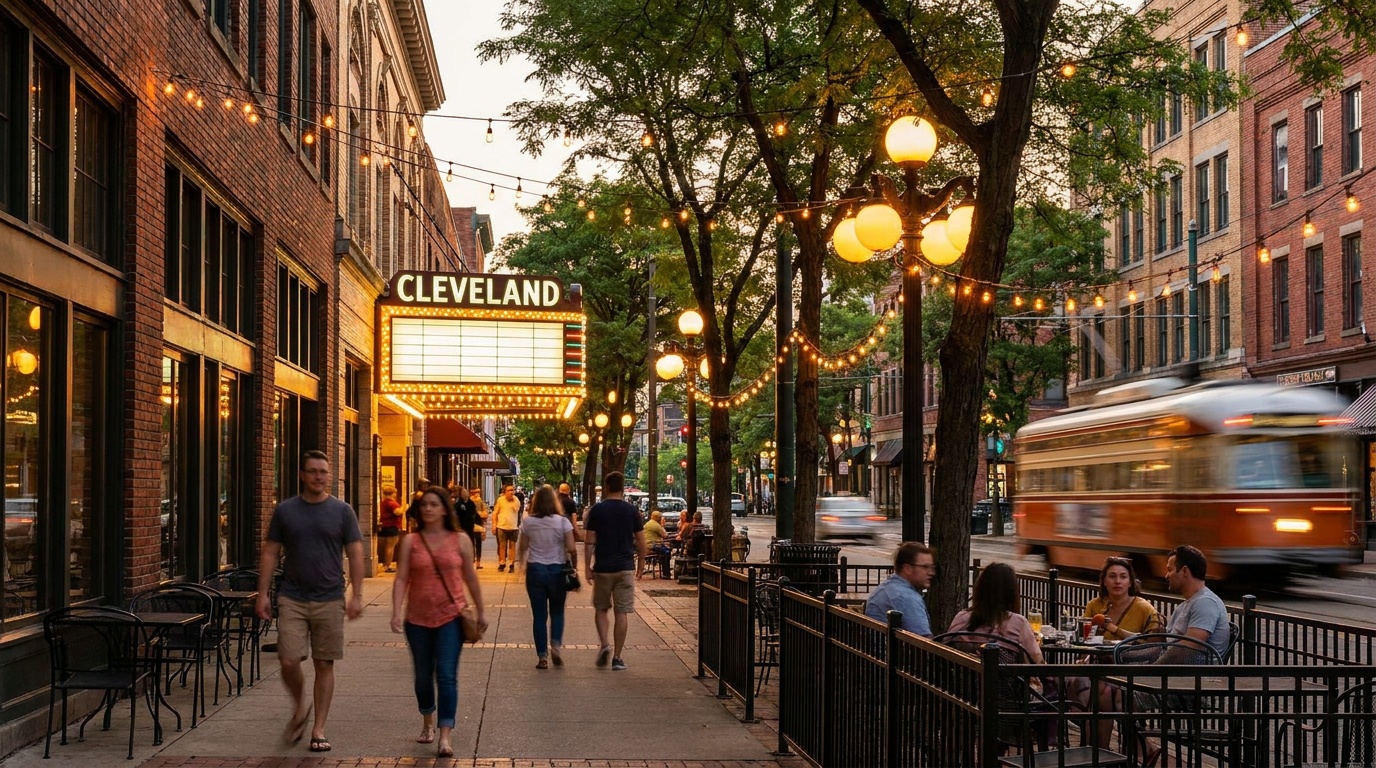
What Are the Best Neighborhoods in Cleveland for Walkability and Nightlife?
Quick Answer: The Warehouse District is Cleveland's most walkable neighborhood for nightlife, with dozens of bars, restaurants, and music venues packed within a few easily navigated blocks. Ohio City ranks a close second with a more neighborhood-centered feel anchored by the iconic West Side Market.
TL;DR
- Cleveland is widely recognized as one of the more walkable Midwestern cities, with several neighborhoods earning strong marks for walkable access to dining, nightlife, and entertainment.
- The Warehouse District stands out as Cleveland's premier destination for walkable nightlife, with venues like Cleveland Chop, Barley House, and Lost Social Club all within easy walking distance.
- Ohio City consistently ranks among the trendiest neighborhoods on Cleveland's West Side, anchored by the iconic West Side Market and a thriving bar and restaurant scene.
- Detroit-Shoreway and Gordon Square have emerged as revitalized nightlife hubs attracting younger residents and creative professionals.
- Walkability in Cleveland goes beyond convenience. The city has earned national recognition for making walkable access equitable across diverse demographics and income levels.
- Tools like Walk Score use composite methodologies that factor in safety, affordability, and transit access alongside walkability, giving you a fuller picture when evaluating neighborhoods.
- Whether you're buying, renting, or relocating to Cleveland, neighborhood walkability and nightlife access can significantly affect your lifestyle and your home's long-term value.
Introduction
Cleveland doesn't always get the credit it deserves when it comes to urban living, but that's starting to change. More homebuyers and renters are actively prioritizing walkable neighborhoods where they can step outside, grab a meal, catch live music, and meet neighbors without needing a car. Cleveland delivers on that promise in more neighborhoods than most people realize.
If you've been wondering which Cleveland neighborhoods offer the best combination of walkability and nightlife, you're asking exactly the right question. The answer shapes not just your daily quality of life but also your investment. Walkable neighborhoods with active nightlife scenes tend to hold value well and attract consistent buyer demand over time.
This guide breaks down the top Cleveland neighborhoods worth your attention, using national rankings, resident reviews, and composite scoring data to give you a clear, honest picture of what each area actually feels like to live in.
Cleveland's Walkability Reputation on the National Stage
Before diving into specific neighborhoods, it helps to understand where Cleveland stands nationally. According to a February 2023 analysis from Streetsblog USA, Cleveland is recognized as one of the most equitably walkable cities in America. That's a strong position for a Midwestern city, and it reflects decades of dense, pre-automobile urban development that many Sun Belt cities simply don't have.
What makes Cleveland's walkability story particularly compelling is the equity angle. The Streetsblog report highlights that walkable access to amenities isn't concentrated only in wealthy enclaves. That matters for a diverse city with residents from every background and income level who want to enjoy the same access to restaurants, transit, and nightlife.
That equity shows up at the neighborhood level. You'll find walkable, lively communities on both sides of the Cuyahoga River, in historic districts and revitalized corridors alike.
Neighborhood Comparison at a Glance
The table below summarizes the four main neighborhoods covered in this guide. Walk Scores reflect publicly reported figures and may shift over time as neighborhood amenities change. Use this as a quick reference before diving into the detailed profiles.
| Neighborhood | Walk Score (approx.) | Nightlife Density | Typical Home Price Range | Best For |
|---|---|---|---|---|
| Warehouse District | 95+ | Very High | Contact The Young Team for current data | Urban professionals, nightlife-first buyers |
| Ohio City | 88–92 | High | Contact The Young Team for current data | Young professionals, families, first-time buyers |
| Detroit-Shoreway / Gordon Square | 78–85 | Moderate–High (growing) | Contact The Young Team for current data | Creative professionals, value-focused buyers |
| Downtown / Gateway District | 90+ | High (event-driven) | Contact The Young Team for current data | Sports fans, transit riders, downtown workers |
Price ranges vary with market conditions. Contact The Young Team for current listing data specific to your search.
The Top Walkable Nightlife Neighborhoods in Cleveland
Warehouse District: Cleveland's Most Concentrated Nightlife Scene
If you're looking for the neighborhood that checks every box for walkable nightlife, the Warehouse District is the place to start. A feature from Islands.com describes the area as offering "walkable proximity to dining, nightlife, and entertainment" with a density of venues that rivals much larger cities.
Within just a few blocks, you can move from dinner at Cleveland Chop, a high-end steakhouse that draws both locals and visitors, to a late evening at Barley House, one of the neighborhood's most popular bars, to live music at Lost Social Club. The streetscape itself, with its preserved industrial architecture and active sidewalks, makes walking between venues feel natural and enjoyable rather than obligatory.
Transit Access: The Warehouse District is served by multiple RTA bus lines and sits within walking distance of Tower City, which connects to the Red, Blue, and Green light rail lines. Riders heading to suburbs along the Red Line or to Cleveland Hopkins International Airport have direct access without needing a car.
Parking Context: For residents who do own a car, monthly parking in the Warehouse District typically runs in the range of roughly $100 to $200 depending on the garage and location. That ongoing cost is worth factoring into your total housing budget, though many residents find that walkability reduces how often they need the car at all.
A Note on Winter Walkability: Cleveland winters are real, and they matter when you're evaluating a walkable neighborhood. The Warehouse District's compact layout means shorter outdoor distances between venues, and many buildings are connected or have covered entryways. Most restaurants and bars in the area remain fully active year-round. That said, icy sidewalks and lake-effect snow are seasonal realities anywhere in Cleveland's urban core, and the practical experience of walkability in January is different from October. Residents consistently note that proximity to destinations, rather than just walkability scores, determines whether you actually leave the house on cold nights.
Recent Development: The neighborhood has seen continued residential investment in recent years, with mixed-use projects adding new housing units and supporting street-level commercial activity. The influx of residents reinforces long-term neighborhood vitality.
The Warehouse District works well for people who want urban living with genuine energy. Residents don't need a car for a Friday night out, and that convenience has real value when you're evaluating where to put down roots.
Ohio City: West Side Character with Serious Food and Bar Culture
Across the river, Ohio City has spent the past decade cementing its reputation as one of Cleveland's most desirable neighborhoods. Morse Moving's neighborhood guide calls it the trendiest neighborhood on Cleveland's West Side, and that assessment continues to hold up.
The anchor of Ohio City's walkable appeal is the West Side Market, a beloved Cleveland institution that draws both residents and visitors to its covered hall of local vendors, fresh produce, and prepared foods. But the neighborhood extends well beyond the market. Ohio City's stretch of West 25th Street is lined with independent restaurants, craft breweries, cocktail bars, and coffee shops, all within comfortable walking distance of the neighborhood's housing stock.
Transit Access: Ohio City is served by the RTA's Red Line, with the West 25th Street station putting residents within minutes of downtown Cleveland and points east. Multiple bus routes also connect the neighborhood to surrounding corridors.
Housing Context: Ohio City offers a range of housing types, from renovated Victorian-era homes to newer condo developments. That variety makes it accessible to first-time buyers and trade-up buyers alike. Contact The Young Team for current listings and pricing.
Resident Perspective: Buyers who have relocated to Ohio City in recent years frequently cite the combination of walkable amenities and neighborhood character as the deciding factor. As one recent relocator described it: walking to the West Side Market on a Saturday morning and then walking to a nearby brewery that same evening captures a lifestyle that's genuinely hard to replicate in suburban settings.
Winter Walkability: Ohio City's West 25th Street corridor is well-traveled enough that sidewalks tend to get cleared relatively quickly after snowfall, and the concentration of businesses along a single main corridor makes winter outings more practical than in more spread-out neighborhoods. The covered West Side Market is itself a popular cold-weather destination, which keeps foot traffic active year-round.
Ohio City attracts a mix of young professionals, longtime Clevelanders, and newcomers who want a walkable lifestyle without the intensity of downtown. The vibe here is a little grittier and more creative than the Warehouse District, which many residents consider a feature rather than a drawback.
Detroit-Shoreway and Gordon Square: The Emerging Creative District
A few blocks west of Ohio City, Detroit-Shoreway and the Gordon Square Arts District have evolved into one of Cleveland's most interesting nightlife corridors. According to Morse Moving's neighborhood overview, this area has experienced significant revitalization in recent years, drawing creative professionals, artists, and younger residents who are shaping a distinct neighborhood identity.
Gordon Square is anchored by the Capitol Theatre, a restored independent cinema that hosts film screenings and community events. The surrounding blocks offer an eclectic mix of bars, restaurants, and live music venues that tend to have a more local, neighborhood feel compared to the more tourist-facing Warehouse District.
Transit Access: The Detroit-Shoreway corridor is served by RTA bus routes running along Detroit Avenue, connecting residents to downtown and to other West Side neighborhoods. The area's walkability is enhanced by relatively flat terrain and a well-maintained street grid.
Housing Context: Detroit-Shoreway offers some of the more affordable entry points among Cleveland's walkable neighborhoods. For buyers who want to get into a walkable, appreciating neighborhood without paying Ohio City prices, this corridor is worth serious attention. Contact The Young Team for current listings and pricing.
Parking Context: Street parking in Detroit-Shoreway is generally more available and less costly than in the Warehouse District or downtown, which is an added practical benefit for residents who own a vehicle while also enjoying walkable access to local amenities.
Recent Development: The Gordon Square Arts District continues to benefit from ongoing investment in commercial storefronts and residential rehabilitation. New restaurant and bar openings have added to nightlife density in recent years, making the area increasingly competitive with more established neighborhoods.
Winter Walkability: Because Detroit-Shoreway is a more spread-out corridor than the compact Warehouse District, winter walkability does require a bit more planning. The neighborhood's flat street grid is an advantage, but distances between destinations tend to be a few blocks longer than in Ohio City. Many residents keep an eye on event programming at the Capitol Theatre and neighborhood restaurants as a reason to get out even in colder months.
For homebuyers, Detroit-Shoreway represents a neighborhood still in an upward trajectory. Walkability here is genuine, and the nightlife scene continues to grow denser with each passing year.
Downtown Cleveland and the Gateway District
Downtown Cleveland, including the Gateway District near Progressive Field and Rocket Mortgage FieldHouse, offers high walkability scores driven by density and transit access. On game nights and concert evenings, the entire area transforms into an outdoor social scene connecting sports fans, diners, and nightlife seekers across several city blocks.
Niche's rankings of Cleveland metro neighborhoods evaluate several Cleveland neighborhoods based on factors including nightlife access, restaurant density, and resident reviews. Multiple residents cite the ease of walking to restaurants and bars from their homes as a key reason they chose their neighborhoods, validating what the data already suggests about Cleveland's urban core.
Transit Access: Downtown is the hub of Cleveland's RTA network. The Red, Blue, Green, and Waterfront light rail lines all converge at Tower City, and dozens of bus routes serve the area. Residents who work downtown or travel frequently benefit from the best transit connectivity in the region.
Parking Context: Downtown parking costs are the highest in the Cleveland market. For residents who rely primarily on transit and walkability, this reinforces the value of choosing a downtown address specifically because you won't need to park regularly.
How Walkability Scores Are Actually Calculated
Walk Score is the most widely used tool for evaluating neighborhood walkability. It rates neighborhoods on a 0 to 100 scale based on proximity to amenities like restaurants, grocery stores, parks, and transit. Scores above 90 are considered a "Walker's Paradise," and scores in the 70s and 80s reflect "Very Walkable" conditions where most errands can be completed on foot.
In practice, raw Walk Scores don't tell the whole story. A neighborhood might have excellent sidewalk connectivity but face challenges with safety metrics, or it might score well on nightlife density but offer fewer affordable options. When evaluating neighborhoods, it's worth looking at walkability data alongside safety statistics from public sources such as the City of Cleveland's crime mapping tool (available through the Cleveland Police Foundation's public resources) and affordability indicators, so you're weighing the full picture rather than a single number.
In Cleveland's context, neighborhoods like Ohio City and the Warehouse District tend to perform well across multiple dimensions simultaneously, not just on raw walkability. That multi-factor strength is part of what makes them consistently popular choices for people relocating to the city.
A Note on Safety
Safety is a real consideration in any city, and Cleveland is no exception. The Warehouse District, Ohio City, and Gordon Square are all areas where significant private and public investment, combined with active street life, has contributed to improved conditions over time. Higher foot traffic, more businesses, and active community organizations generally correlate with improved safety perceptions in urban neighborhoods.
That said, conditions vary by specific block and change over time. Prospective buyers and renters should visit neighborhoods at multiple times of day and evening, research block-level data through the City of Cleveland's public crime mapping resources, and speak with current residents before making a decision. Safety data is publicly accessible and should be part of any serious neighborhood evaluation.
Local Market Insights
Cleveland's walkable neighborhoods are not immune to the broader trends reshaping real estate. Demand for urban, walkable housing has remained strong even as remote work patterns evolve, partly because people who can work from anywhere are actively choosing cities with livable, walkable urban cores.
Ohio City and the Warehouse District both continue to see competitive buyer interest, and new residential development in the Detroit-Shoreway corridor is adding housing inventory while preserving the neighborhood's street-level commercial activity. If you're considering a purchase in any of these neighborhoods, understanding the local market dynamics is essential before making an offer.
Cleveland's relative affordability compared to other walkable Midwestern cities like Chicago and Minneapolis continues to attract out-of-state buyers who recognize the value. Walkable Cleveland neighborhoods offer a lifestyle that would cost significantly more in comparable cities, and that gap remains real today. Contact The Young Team for current pricing across neighborhood types, from more affordable entry points in Detroit-Shoreway to premium loft conversions and new condos in the Warehouse District.
Frequently Asked Questions
Which Cleveland neighborhood is best for someone who wants to walk to bars and restaurants every night?
The Warehouse District is the strongest answer for pure nightlife walkability. The density of venues is high, the streets are active most evenings, and you can easily move between several different bars and restaurants in a single outing. Ohio City is a close second with a slightly more neighborhood-centered feel.
Is Cleveland actually walkable, or is it mostly a car-dependent city?
Cleveland is more walkable than its reputation suggests. According to a February 2023 report from Streetsblog USA, Cleveland is recognized as one of the most equitably walkable cities in the country, and several urban neighborhoods score well above average on composite walkability tools. The key is choosing the right neighborhood. Suburban Cleveland requires a car, but the urban core, including Ohio City, the Warehouse District, and Gordon Square, supports a genuinely walkable lifestyle.
Are walkable Cleveland neighborhoods safe?
Safety varies by specific block and changes over time. The Warehouse District, Ohio City, and Gordon Square are all areas where significant investment and active street life have contributed to improved safety conditions. Like any city, conditions vary, and you should research specific streets, consult public crime mapping tools through the City of Cleveland's resources, and visit neighborhoods at different times of day before making a decision.
How does walkability affect home values in Cleveland?
Walkable neighborhoods with active amenities tend to hold their value well over time. Buyer demand for urban, walkable homes has remained consistent in Cleveland, and properties in Ohio City and the Warehouse District have historically outperformed less walkable areas during market fluctuations.
What's the difference between Gordon Square and Ohio City for a first-time buyer?
Ohio City is more established, with a denser concentration of amenities along West 25th Street and generally higher home prices reflecting its desirability. Gordon Square is still in a growth phase, with more affordable entry points and potential for appreciation over time. Both offer genuine walkability and active nightlife, but the character of each neighborhood is distinct. Contact The Young Team for current pricing in both areas.
Can I find family-friendly walkable neighborhoods in Cleveland with nightlife nearby?
Yes. Ohio City in particular has a mix of families and young professionals, and the neighborhood's walkability supports both a lively social scene and everyday errands. West Side Market access, proximity to parks, and a strong sense of community make it viable for a range of household types.
How does Cleveland walkability hold up in winter?
It depends on the neighborhood. The Warehouse District and Ohio City's main corridors tend to stay active year-round because foot traffic incentivizes business owners and property managers to maintain sidewalks. Detroit-Shoreway, with its longer blocks, can feel more challenging in heavy snow. In general, Cleveland's walkable neighborhoods function best in winter when your key destinations are close together, which is exactly what high-density neighborhoods offer. Checking sidewalk maintenance conditions on a specific block before purchasing is a practical step for serious buyers.
Next Steps: Find Your Walkable Cleveland Neighborhood
If you're ready to explore Cleveland's walkable neighborhoods and find a home that fits your lifestyle, The Young Team is here to help. Our agents know these neighborhoods from the inside out and can help you evaluate properties across all the factors that matter, from commute options to street-level energy to long-term investment potential.
The Young Team offers programs designed to reduce the stress of buying or selling, including the Worry-Free Listing program for sellers and the Guaranteed Cash Offer program for those who want flexibility and control over their timeline. Our Forever Client Care model means we stay connected long after closing.
Contact The Young Team:
- Visit us online at theyoungteam.com
- Call us at 216-402-4774 to speak with an agent about Cleveland neighborhood options
- Visit our office at 34105 Chagrin Blvd
We serve buyers and sellers across the Greater Cleveland area, including the urban neighborhoods covered in this guide.
Conclusion
Cleveland's walkable neighborhoods offer something genuinely valuable: a city-living experience that doesn't require a car, a high credit score, or a Silicon Valley salary to enjoy. From the dense nightlife of the Warehouse District to the creative energy of Gordon Square, Cleveland has built an urban landscape that rewards people who want to live, eat, and connect locally.
The city's national recognition for equitable walkability reflects a community that has invested in making urban life accessible across demographics, not just in premium zip codes. That's a story worth telling, and it's a real factor in why Cleveland continues to attract buyers who are looking for more than just square footage.
When you're ready to make your move, The Young Team is ready to help you find the right fit in the right neighborhood.
The Young Team is a Keller Williams Greater Metropolitan team serving buyers and sellers across Greater Cleveland. Contact us at theyoungteam.com or 216-402-4774.